DonateMembershipVisit Heritage
  • Tūrangawaewae
    Places
  • Tira Māori
    Māori Heritage
  • Poutairangahia
    Archaeology
  • Rauemi
    Resources
  • Mō Tātou
    About Us
  • New Zealand Heritage List
  • Nominate and submit
  • Explore the List
  • National Historic Landmarks
  • Plaques
  • Rainbow List Project
  • Lost heritage
  • Visit Heritage
  • Our properties
  • Turnbull House Project
  • Collections
  • Shop
  • Tohu Whenua
  • Tira Māori
  • Conserving Māori heritage
  • Marae built heritage
  • Māori heritage on the List
  • Hinemihi—Te Hokinga Mai
  • What is archaeology?
  • Is there a site on my property?
  • What are my legal requirements?
  • Affecting an archaeological site
  • Declaring an archaeological site
  • Archaeology FAQs
  • Archaeology Digital Library
  • Archaeology guidelines and templates
  • Resources
  • Funding
  • Publications
  • Sustainable management guides
  • Disaster recovery
  • Podcasts & digital resources
  • Education Hub
  • Conservation plans
  • About
  • Board
  • Māori Heritage Council
  • Senior Staff
  • Offices
  • Contact us
  • Careers
  • Covenants
  • Fast-track
  • Corporate documents
  • Currently consulting on
  • Our submissions
  • News
  • Covid-19 response
Quick links
Rārangi Kōrero | The List
Explore the List
National Historic Landmarks
Ngā Manawhenua o Aotearoa me ōna Kōrero Tūturu
Quick links
Tapuwae
A Vision for Places of Māori Heritage
Funding for Māori Heritage
Resources
Quick links
Archaeological Authority Portal
Applying for an archaeological authority
Archaeology FAQs
Browse the most frequently asked questions about archaeological authorities and the archaeological process.
Quick links
Quick links
News
News Keep up to date with Heritage New Zealand Pouhere Taonga
Membership
Membership Find out more and sign up today
DonateMembershipVisit Heritage
  • Tūrangawaewae
    Places
  • Tira Māori
    Māori Heritage
  • Poutairangahia
    Archaeology
  • Rauemi
    Resources
  • Mō Tātou
    About Us
  • New Zealand Heritage List
  • Nominate and submit
  • Explore the List
  • National Historic Landmarks
  • Plaques
  • Rainbow List Project
  • Lost heritage
  • Visit Heritage
  • Our properties
  • Turnbull House Project
  • Collections
  • Shop
  • Tohu Whenua
  • Tira Māori
  • Conserving Māori heritage
  • Marae built heritage
  • Māori heritage on the List
  • Hinemihi—Te Hokinga Mai
  • What is archaeology?
  • Is there a site on my property?
  • What are my legal requirements?
  • Affecting an archaeological site
  • Declaring an archaeological site
  • Archaeology FAQs
  • Archaeology Digital Library
  • Archaeology guidelines and templates
  • Resources
  • Funding
  • Publications
  • Sustainable management guides
  • Disaster recovery
  • Podcasts & digital resources
  • Education Hub
  • Conservation plans
  • About
  • Board
  • Māori Heritage Council
  • Senior Staff
  • Offices
  • Contact us
  • Careers
  • Covenants
  • Fast-track
  • Corporate documents
  • Currently consulting on
  • Our submissions
  • News
  • Covid-19 response
Quick links
Rārangi Kōrero | The List
Explore the List
National Historic Landmarks
Ngā Manawhenua o Aotearoa me ōna Kōrero Tūturu
Quick links
Tapuwae
A Vision for Places of Māori Heritage
Funding for Māori Heritage
Resources
Quick links
Archaeological Authority Portal
Applying for an archaeological authority
Archaeology FAQs
Browse the most frequently asked questions about archaeological authorities and the archaeological process.
Quick links
Quick links
News
News Keep up to date with Heritage New Zealand Pouhere Taonga
Membership
Membership Find out more and sign up today
  • Places
  • Nominate and submit
  • National Historic Landmarks
  • Places
  • Nominate and submit
  • National Historic Landmarks
  • Tira Māori
  • Conserving Māori heritage
  • Marae built heritage
  • Tira Māori
  • Conserving Māori heritage
  • Marae built heritage
  • Archaeological authorities
  • Archaeology Digital Library
  • Archaeological authorities
  • Archaeology Digital Library
  • All resources
  • Publications
  • Funding
  • All resources
  • Publications
  • Funding
  • FAQs
  • FAQs
Follow us on:
Places
  • Places
  • Nominate and submit
  • National Historic Landmarks
Tira Māori
  • Tira Māori
  • Conserving Māori heritage
  • Marae built heritage
Archaeology
  • Archaeological authorities
  • Archaeology Digital Library
Resources
  • All resources
  • Publications
  • Funding
FAQs
  • FAQs
Follow us on
HomePrivacyTerms and conditionsAbout this site
© Heritage New Zealand Pouhere Taonga 2026.
 
Te Wepu

122 Papanui Road, Merivale, CHRISTCHURCH

Private

Historic Place Category 2

List No. 4923
Quick links:
List GalleryLocationDetails
Te Wepu was designed by noted Canterbury architect Samuel Farr in 1882 for prominent Christchurch businessman and politician Henry (Harry) Richard Webb (1829-1901) and his wife Augusta (neè Peacock). It forms part of an historical landscape of nineteenth century houses that portray the close social and economic relationships within the extended Peacock family at this time.

In 1868 Ferguson and Webb, the New South Wales-based family shipping company managed by Harry Webb failed. Coincidentally the management of the Lyttelton-based New Zealand interests of Peacock and Co, the shipping company of his wife's family, became available at this time. Harry accepted the position, and he and Augusta moved across the Tasman. Whilst in Lyttelton, Webb served as a member of the Canterbury Provincial Council (1869-75), and as the local member of parliament (1869-75). Later the shipping interests were sold, with Webb becoming the manager of the Permanent Investment and Loan Association in 1879. The following year the family moved to Christchurch, renting a house in Cashel Street. In 1881 a ¾ acre (0.3 ha) section was purchased on Papanui Road in St Albans, an area popular with many of the city's prominent citizens - including Augusta's brother John Thomas Peacock, and her sisters Elizabeth Garrick and Theresa Brown.

In 1882 Webb had prominent Christchurch architect Samuel Farr design a house the family initially called Domus Textorum, but was later to call Te Wepu, after the Maori transliteration of Webb. Samuel Charles Farr (1827-1918) arrived from England at Akaroa in 1850, where he established himself as a builder and architect. Moving to Christchurch in 1862, he continued what proved to be a very long and successful career. Farr was particularly known for designing churches and houses, although perhaps his most prominent surviving building is the former Christchurch Normal School (1876, Category I). Te Wepu was a regularly planned Italianate villa, and is typical of Farr's later work. Pam Wilson in her thesis on Farr wrote of the house:

At Te Wepu Farr reworked tried and trusted formulas of plan and design to provide a comfortable family home. Though the style was unexceptional for Christchurch in 1882, the house was well proportioned and attractively dressed with architectural embellishments. It was conveniently planned, soundly built of good quality materials, and finished with a fine attention to details. Comfort, convenience and economy were balanced with an appropriate degree of Victorian pretension.

The family was large, and there were as many as eight bedrooms in the dwelling. In 1890 the rear of the house was extensively damaged by fire, and about £1, 000 was spent on rebuilding and refurnishing. The single storey service wing was probably replaced with a two-storey extension at this time.


After moving to Christchurch, Henry Webb remained involved in the community. Webb was a keen supporter of his church, St John the Baptist in Latimer Square, and maintained an interest in education. He served on the Board of School Commissioners for 18 years, was chairman of the North Canterbury Board of Education, and one of the original members of the Board of Governors of Canterbury College. He also helped establish the technological room at the museum, the forerunner to the School of Engineering. Webb retired in 1893 and died in 1901. He was apparently 'greatly missed by his adopted city'.

After Webb's death, Augusta subdivided the property, selling sections in 1903, 1905, and 1908. The house itself was sold in 1911 to widow Margaret Buckham, who operated a boarding house from the property. Buckham died in 1926, and the house was transmitted to Charles Torlesse, a bank manager of Timaru, and Helen Buckham, spinster of Christchurch. Torlesse and Buckham sold the following year to Leonard Young, a Christchurch motor engineer. Young had builder A. Soanes extend the house to the east in 1927 to provide more boarding house accommodation. Alterations were also carried out in 1944, including the installation of more toilets. On Young's death in 1945, Te Wepu was transmitted to his widow Anne Young. Mrs Young subdivided the front of the property in 1951, and Te Wepu lost its frontage to Papanui Road.

Over the next thirty years, Te Wepu changed hands many times. During the 1960s, it was extended on the north elevation. In 1986 a period of change was initiated with the transfer of the house to John Smith, a Christchurch restaurateur, and his wife Rosalind. The Smiths intended to restore the house and use the front section as an antique showroom, but were prevented by the city scheme. Later in 1986 the Smiths' put Te Wepu on the market again, and it was sold to Duncan Shelf No. 8 Ltd.

In 1990 the property was sold to Elizabeth and John Harris. During 2000 the Harris's initiated enquiries into rezoning for motels. In 2003 a condition report on Te Wepu by Design Group Skews Ussher (now Skews Architecture) declared the original 1882/90 house sound. On this basis the Harris's applied on behalf of prospective buyers KTB Holdings for consent to demolish the 1952 house on the road frontage, develop eight luxury travellers accommodation units (in two blocks) in front of Te Wepu, and restore and convert the old house itself into nine luxury travellers' accommodation units and a manager's flat. However the Harris's sold Te Wepu to Memorial Property Holdings in October 2003, just prior to the consent being granted.

In February 2004, prospective occupier Esteme Ltd applied for consent to convert Te Wepu into travellers' accommodation, as per the 2003 consent. In a variation however, Esteme proposed to retain and convert the 1952 house into a hair, beauty and therapeutic facility. The city council and a number of submitters opposed the new application, and by early June it had been withdrawn. Memorial Property applied for demolition consent in May, but withdrew in July. The following month, Skews Architecture applied on behalf of Memorial Property Holdings for consent to proceed the earlier KTB Holdings proposal. After the second part of the consent - including the alteration of Te Wepu itself - was granted in October, development proceeded rapidly under the banner of Riccarton Construction (an arm of Memorial Property). By the end of that month, the 1952 front house; the 1927, 1944 and 1960s additions to Te Wepu; and its original verandah had been demolished, and the new motel blocks were rising. Internal adaptation saw the removal of remaining flat partitioning from the house, thereby essentially restoring the 1890 layout and circulation. Remaining character features such as fireplaces and mouldings were restored, although all ceilings were lowered slightly to conceal new service connections. New ensuites and kitchen facilities were inserted in each room. The exterior was similarly restored, with the newly exposed eastern elevation sensitively replicated. The western verandah was replaced in close to original form using sound existing material and retained items of detailing. Unfortunately work was two weeks from completion in May 2005, when an arson badly damaged the stairwell. After around-the-clock repairs, Te Wepu reopened as Merivale Manor in early June.
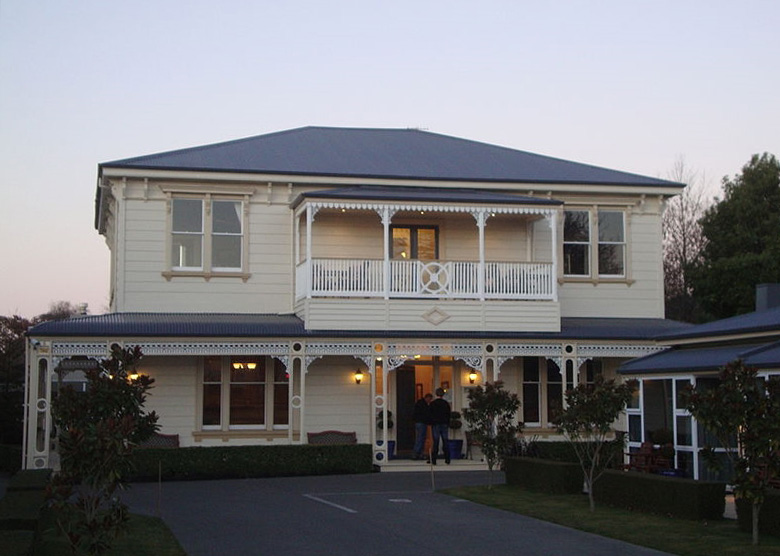
Te Wepu (Merivale Manor). (CC BY-SA 3.0 Licence). Image courtesy of commons.wikimedia.org | Schwede66 - Wikimedia Commons | 09/08/2011 | Schwede66
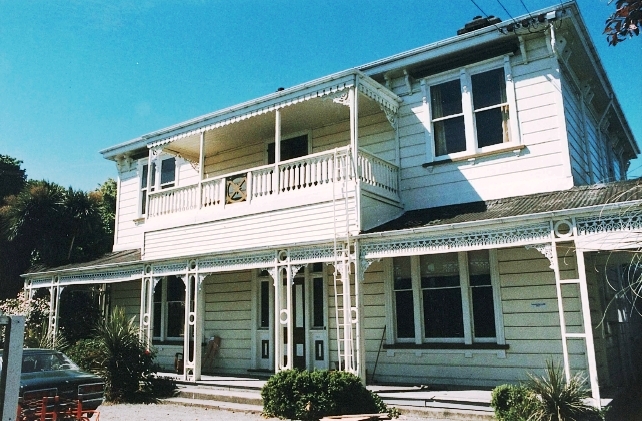
Te Wepu (Merivale Manor). Image included in Field Record Form Collection | Heritage New Zealand
Te Wepu (Merivale Manor). (CC BY-SA 3.0 Licence). Image courtesy of commons.wikimedia.org | Schwede66 - Wikimedia Commons | 09/08/2011 | Schwede66
Te Wepu (Merivale Manor). Image included in Field Record Form Collection | Heritage New Zealand

List Entry Information

Overview

Status
Listed

List Entry Status
Historic Place Category 2

Access
Private/No Public Access

List Number
4923

Date Entered
23rd September 2005

Date of Effect
23rd September 2005

City/District Council
Christchurch City

Region
Canterbury Region

Extent of List Entry

The registration includes the house, its fittings and fixtures, and part of the land in RT 176332 (being formerly RT CB560/38: Lot 2 DP 16353). The registration does not include the motel buildings constructed around Te Wepu during 2004-5.

Legal description

Lot 1 DP 342974 (RT 176332), Canterbury Land District

Detailed List Entry
Significance

Historic Significance

Historical Significance or Value Historical significance as the former home of prominent Christchurch businessman and politician Henry Webb.

Physical Significance

Architectural significance as an example of the work of important Canterbury architect Samuel Farr.

Detail Of Assessed Criteria

(b) is associated with Henry Webb: businessman, politician and prominent member of the community in late nineteenth century Christchurch. (g) is typical in plan and decoration of the contemporary designs of Samuel Farr, and serves as an exemplar of the solid four-square Italianate homes that were being built across the country for the well-off during the 1870s and 1880s. (k) forms part of a wider historical landscape with Chippenham and Amwell, the nearby former homes of Augusta Webb's sisters. Together the houses indicate the close social and economic linkages within the extended Peacock family in the nineteenth century.

Construction Professional

Name

Farr, Samuel Charles

Type

Architect

Biography

Samuel Farr (1827-1918) arrived in Canterbury in April 1850, before the 'first four ships', the ships that brought British settlers to the city of Christchurch. He worked at Akaroa as a builder, turning his mind to solutions for various problems faced by the settlers in the area and proving his worth as an adaptable and versatile colonist. In 1863 he moved to Christchurch, advertising his services as an architect. Whether he had ever trained formally for this profession has not been established, but it seems likely that he was one of the several 19th century settlers who managed successfully in this field after some practical experience and diligent self-education. Farr had a considerable flair for design and an ability to give his clients what they considered "value for money", and had the good fortune to launch his career by winning a number of prestigious competitions in Christchurch, thus settling his name firmly in the public eye. His designs followed current conventions of style and decoration, but he was innovative in his early use of concrete, most notably the construction of a complex of buildings for wealthy runholder, George Moore, at Glenmark between 1875-1881. Farr was a versatile designer, equally at home with classically influenced styles, such as he used for St Paul's Presbyterian Church (1876) or with Gothic which he employed frequently in schools and churches. The former Normal School, Christchurch (1873-76) is perhaps his most scholarly Gothic design.

Name

Soanes, A

Type

Builder

Biography

No biography is currently available for this construction professional

Construction Details

Start Year

1882

Type

Original Construction

Start Year

1890

Type

Modification

Description

Partial reconstruction and probable extension at rear.

Start Year

1927

Type

Modification

Description

Boarding house extension to the rear.

Start Year

1944

Type

Modification

Description

Alterations, including toilets and minor additions to the north and south elevations.

Type

Modification

Description

Minor additions to north elevation.

Period

1960s

Start Year

2004

Finish Year

2005

Type

Modification

Description

Demolition of 1927 extension, 1944 and 1960s additions, and verandah. Restoration and adaption as part of motel development, Merivale Manor.

Construction Materials

Timber with a corrugated iron roof.

Physical Description

A large, plain, rusticated weather-board two-storey Italianate colonial villa. The main (west) elevation is distinguished by a full-width verandah. Originally this projected beyond the walls at either end, but when reconstructed in (close to) original form in early 2005, it was continued part way down the northern elevation. This verandah is surmounted with a smaller centrally-located balcony. Both verandah and balcony are decorated with a combination of fretted timber and cast iron lace work. Te Wepu was recently restored and adapted to serve as part of a motel development. In addition to preserving the house and restoring its typical villa internal plan, this development has also restored Te Wepu's relationship to Papanui Road; additional units being situated to facilitate a view from the street.

Reference

Information Sources

Christchurch City Council

Christchurch City Council

Wilson, 1982

Pam Wilson, 'The Architecture of Samuel Charles Farr 1827-1918', MA thesis, University of Canterbury, 1982

MacDonald Biographies

G.R. MacDonald, Dictionary of Canterbury Biographies, Canterbury Museum, n.d.

New Zealand Historic Places Trust (NZHPT)

New Zealand Historic Places Trust

New Zealand Federation of University Women, 1989

St Albans: From Swamp to Suburbs, An Informal History NZ Federation of University Women Canterbury Branch, 1989.

Report Written By

A fully referenced version of this report is available from the NZHPT Southern Region Office. Please note that entry on the New Zealand Heritage List/Rarangi Korero identifies only the heritage values of the property concerned, and should not be construed as advice on the state of the property, or as a comment of its soundness or safety, including in regard to earthquake risk, safety in the event of fire, or insanitary conditions.

Further Information

Current Usages

Uses: Accommodation

Specific Usage: Motel

Former Usages

General Usage:: Accommodation

Specific Usage: House

Themes

Web Links

description: Merivale Manor website

url: http://www.merivalemanor.co.nz/history.html

Overview

Status

Listed

List Entry Status

Historic Place Category 2

Access

Private/No Public Access

List Number

4923

Date Entered

23rd September 2005

Date of Effect

23rd September 2005

City/District Council

Christchurch City

Region

Canterbury Region

Extent of List Entry

The registration includes the house, its fittings and fixtures, and part of the land in RT 176332 (being formerly RT CB560/38: Lot 2 DP 16353). The registration does not include the motel buildings constructed around Te Wepu during 2004-5.

Legal description

Lot 1 DP 342974 (RT 176332), Canterbury Land District

Status

Listed

List Entry Status

Historic Place Category 2

Access

Private/No Public Access

List Number

4923

Date Entered

23rd September 2005

Date of Effect

23rd September 2005

City/District Council

Christchurch City

Region

Canterbury Region

Extent of List Entry

The registration includes the house, its fittings and fixtures, and part of the land in RT 176332 (being formerly RT CB560/38: Lot 2 DP 16353). The registration does not include the motel buildings constructed around Te Wepu during 2004-5.

Legal description

Lot 1 DP 342974 (RT 176332), Canterbury Land District

Significance

Why is this place significant?

Historic Significance

Historical Significance or Value Historical significance as the former home of prominent Christchurch businessman and politician Henry Webb.

Physical Significance

Architectural significance as an example of the work of important Canterbury architect Samuel Farr.

Why is this place Category 1 / Category 2?

Detail Of Assessed Criteria

(b) is associated with Henry Webb: businessman, politician and prominent member of the community in late nineteenth century Christchurch. (g) is typical in plan and decoration of the contemporary designs of Samuel Farr, and serves as an exemplar of the solid four-square Italianate homes that were being built across the country for the well-off during the 1870s and 1880s. (k) forms part of a wider historical landscape with Chippenham and Amwell, the nearby former homes of Augusta Webb's sisters. Together the houses indicate the close social and economic linkages within the extended Peacock family in the nineteenth century.

Why is this place significant?

Historic Significance

Historical Significance or Value Historical significance as the former home of prominent Christchurch businessman and politician Henry Webb.

Physical Significance

Architectural significance as an example of the work of important Canterbury architect Samuel Farr.

Why is this place Category 1 / Category 2?

Detail Of Assessed Criteria

(b) is associated with Henry Webb: businessman, politician and prominent member of the community in late nineteenth century Christchurch. (g) is typical in plan and decoration of the contemporary designs of Samuel Farr, and serves as an exemplar of the solid four-square Italianate homes that were being built across the country for the well-off during the 1870s and 1880s. (k) forms part of a wider historical landscape with Chippenham and Amwell, the nearby former homes of Augusta Webb's sisters. Together the houses indicate the close social and economic linkages within the extended Peacock family in the nineteenth century.

Construction Information

Construction Professional

Name

Farr, Samuel Charles

Type

Architect

Biography

Samuel Farr (1827-1918) arrived in Canterbury in April 1850, before the 'first four ships', the ships that brought British settlers to the city of Christchurch. He worked at Akaroa as a builder, turning his mind to solutions for various problems faced by the settlers in the area and proving his worth as an adaptable and versatile colonist. In 1863 he moved to Christchurch, advertising his services as an architect. Whether he had ever trained formally for this profession has not been established, but it seems likely that he was one of the several 19th century settlers who managed successfully in this field after some practical experience and diligent self-education. Farr had a considerable flair for design and an ability to give his clients what they considered "value for money", and had the good fortune to launch his career by winning a number of prestigious competitions in Christchurch, thus settling his name firmly in the public eye. His designs followed current conventions of style and decoration, but he was innovative in his early use of concrete, most notably the construction of a complex of buildings for wealthy runholder, George Moore, at Glenmark between 1875-1881. Farr was a versatile designer, equally at home with classically influenced styles, such as he used for St Paul's Presbyterian Church (1876) or with Gothic which he employed frequently in schools and churches. The former Normal School, Christchurch (1873-76) is perhaps his most scholarly Gothic design.

Name

Soanes, A

Type

Builder

Biography

No biography is currently available for this construction professional

Construction Details

Start Year

1882

Type

Original Construction

Start Year

1890

Type

Modification

Description

Partial reconstruction and probable extension at rear.

Start Year

1927

Type

Modification

Description

Boarding house extension to the rear.

Start Year

1944

Type

Modification

Description

Alterations, including toilets and minor additions to the north and south elevations.

Type

Modification

Description

Minor additions to north elevation.

Period

1960s

Start Year

2004

Finish Year

2005

Type

Modification

Description

Demolition of 1927 extension, 1944 and 1960s additions, and verandah. Restoration and adaption as part of motel development, Merivale Manor.

Construction Materials

Timber with a corrugated iron roof.

Construction Professional

Name

Farr, Samuel Charles

Type

Architect

Biography

Samuel Farr (1827-1918) arrived in Canterbury in April 1850, before the 'first four ships', the ships that brought British settlers to the city of Christchurch. He worked at Akaroa as a builder, turning his mind to solutions for various problems faced by the settlers in the area and proving his worth as an adaptable and versatile colonist. In 1863 he moved to Christchurch, advertising his services as an architect. Whether he had ever trained formally for this profession has not been established, but it seems likely that he was one of the several 19th century settlers who managed successfully in this field after some practical experience and diligent self-education. Farr had a considerable flair for design and an ability to give his clients what they considered "value for money", and had the good fortune to launch his career by winning a number of prestigious competitions in Christchurch, thus settling his name firmly in the public eye. His designs followed current conventions of style and decoration, but he was innovative in his early use of concrete, most notably the construction of a complex of buildings for wealthy runholder, George Moore, at Glenmark between 1875-1881. Farr was a versatile designer, equally at home with classically influenced styles, such as he used for St Paul's Presbyterian Church (1876) or with Gothic which he employed frequently in schools and churches. The former Normal School, Christchurch (1873-76) is perhaps his most scholarly Gothic design.

Name

Soanes, A

Type

Builder

Biography

No biography is currently available for this construction professional

Construction Details

Start Year

1882

Type

Original Construction

Start Year

1890

Type

Modification

Description

Partial reconstruction and probable extension at rear.

Start Year

1927

Type

Modification

Description

Boarding house extension to the rear.

Start Year

1944

Type

Modification

Description

Alterations, including toilets and minor additions to the north and south elevations.

Type

Modification

Description

Minor additions to north elevation.

Period

1960s

Start Year

2004

Finish Year

2005

Type

Modification

Description

Demolition of 1927 extension, 1944 and 1960s additions, and verandah. Restoration and adaption as part of motel development, Merivale Manor.

Construction Materials

Timber with a corrugated iron roof.

Physical Description

A large, plain, rusticated weather-board two-storey Italianate colonial villa. The main (west) elevation is distinguished by a full-width verandah. Originally this projected beyond the walls at either end, but when reconstructed in (close to) original form in early 2005, it was continued part way down the northern elevation. This verandah is surmounted with a smaller centrally-located balcony. Both verandah and balcony are decorated with a combination of fretted timber and cast iron lace work. Te Wepu was recently restored and adapted to serve as part of a motel development. In addition to preserving the house and restoring its typical villa internal plan, this development has also restored Te Wepu's relationship to Papanui Road; additional units being situated to facilitate a view from the street.

A large, plain, rusticated weather-board two-storey Italianate colonial villa. The main (west) elevation is distinguished by a full-width verandah. Originally this projected beyond the walls at either end, but when reconstructed in (close to) original form in early 2005, it was continued part way down the northern elevation. This verandah is surmounted with a smaller centrally-located balcony. Both verandah and balcony are decorated with a combination of fretted timber and cast iron lace work. Te Wepu was recently restored and adapted to serve as part of a motel development. In addition to preserving the house and restoring its typical villa internal plan, this development has also restored Te Wepu's relationship to Papanui Road; additional units being situated to facilitate a view from the street.

Reference

Historical and Associated Iwi / Hapū / Whānau

Information Sources

Christchurch City Council

Christchurch City Council

Wilson, 1982

Pam Wilson, 'The Architecture of Samuel Charles Farr 1827-1918', MA thesis, University of Canterbury, 1982

MacDonald Biographies

G.R. MacDonald, Dictionary of Canterbury Biographies, Canterbury Museum, n.d.

New Zealand Historic Places Trust (NZHPT)

New Zealand Historic Places Trust

New Zealand Federation of University Women, 1989

St Albans: From Swamp to Suburbs, An Informal History NZ Federation of University Women Canterbury Branch, 1989.

Other Information

A fully referenced version of this report is available from the NZHPT Southern Region Office. Please note that entry on the New Zealand Heritage List/Rarangi Korero identifies only the heritage values of the property concerned, and should not be construed as advice on the state of the property, or as a comment of its soundness or safety, including in regard to earthquake risk, safety in the event of fire, or insanitary conditions.

Historical and Associated Iwi / Hapū / Whānau

Information Sources

Christchurch City Council

Christchurch City Council

Wilson, 1982

Pam Wilson, 'The Architecture of Samuel Charles Farr 1827-1918', MA thesis, University of Canterbury, 1982

MacDonald Biographies

G.R. MacDonald, Dictionary of Canterbury Biographies, Canterbury Museum, n.d.

New Zealand Historic Places Trust (NZHPT)

New Zealand Historic Places Trust

New Zealand Federation of University Women, 1989

St Albans: From Swamp to Suburbs, An Informal History NZ Federation of University Women Canterbury Branch, 1989.

Other Information

A fully referenced version of this report is available from the NZHPT Southern Region Office. Please note that entry on the New Zealand Heritage List/Rarangi Korero identifies only the heritage values of the property concerned, and should not be construed as advice on the state of the property, or as a comment of its soundness or safety, including in regard to earthquake risk, safety in the event of fire, or insanitary conditions.

Further Information

Current Usages

Uses: Accommodation

Specific Usage: Motel

Former Usages

General Usage: Accommodation

Specific Usage: House

Web Links

description: Merivale Manor website

url: http://www.merivalemanor.co.nz/history.html

Current Usages

Uses: Accommodation

Specific Usage: Motel

Former Usages

General Usage: Accommodation

Specific Usage: House

Web Links

description: Merivale Manor website

url: http://www.merivalemanor.co.nz/history.html

Location

Loading
Stay up to date with Heritage this month